
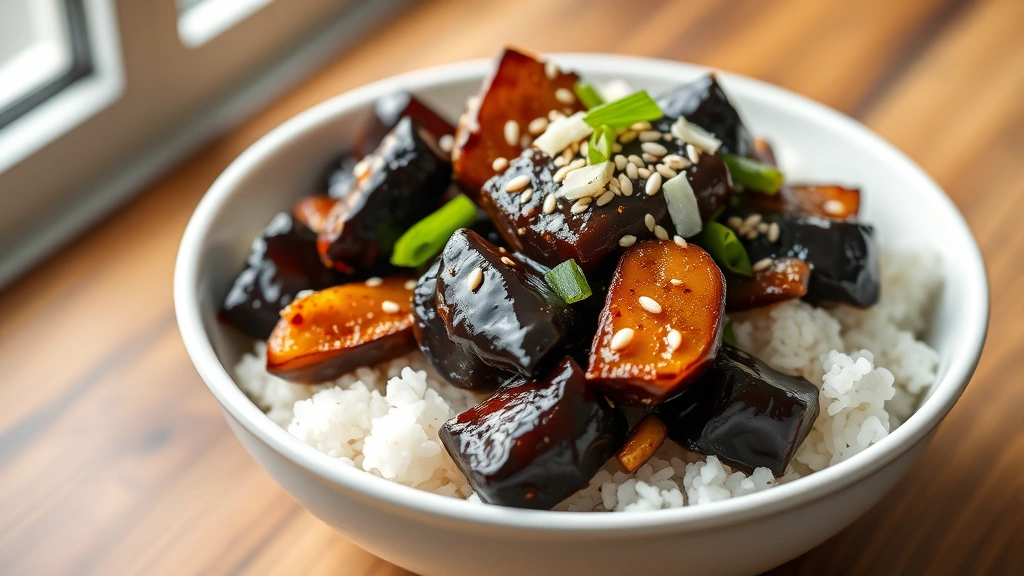
Asian eggplant stir fry is one of my absolute favorite weeknight dinners – it’s quick, incredibly flavorful, and somehow feels both restaurant-quality and completely achievable at home. I’m talking tender, silky eggplant that’s been kissed with a savory-sweet sauce, all coming together in about 20 minutes flat.
What I love most about this dish is how the eggplant transforms during cooking. When you get the pan hot enough and don’t overcrowd it, the eggplant develops these gorgeous caramelized edges while staying creamy on the inside. It’s pure magic, honestly. The sauce – a beautiful balance of soy sauce, rice vinegar, garlic, and just a hint of heat – clings to every piece, making this the kind of dish you’ll find yourself coming back to again and again.
I’ve been making variations of this recipe for years, and I’m so excited to share my tested and perfected version with you. This is the kind of recipe that works beautifully as a vegetarian main course served over steamed rice, or as a stunning side dish alongside grilled proteins. I’ve served it at dinner parties, made it for quick family dinners, and even packed it for lunch the next day (it reheats beautifully).
The secret to success here is really three-fold: first, you need a screaming hot pan – this creates that beautiful caramelization. Second, don’t skip the salting and draining step for the eggplant, which removes excess moisture and ensures you get that silky texture rather than a soggy result. And third, have all your ingredients prepped and ready to go before you start cooking, because this comes together fast once you hit the heat.
If you’re new to cooking with Asian eggplant, you’re in for a treat. It’s milder and less bitter than globe eggplant, with a creamier texture when cooked. You can find it at most grocery stores now, but if you can’t locate it, globe eggplant works too – just adjust your cooking time slightly. I’ve also included some wonderful Serious Eats inspiration in my technique here.
This recipe is endlessly adaptable too. Want to add protein? Crumbled tofu, ground pork, or shrimp all work beautifully. Prefer more heat? Increase the chili flakes or add fresh Thai chilies. Like it sweeter? A touch more honey or a splash of hoisin sauce does the trick. This is the kind of recipe that becomes part of your regular rotation because it’s just so darn good.
I promise you, once you master this technique, you’ll be making it constantly. It’s become such a staple in my kitchen, and I hope it becomes one in yours too. Let’s get cooking!
Ingredients
- 2 pounds Asian eggplant (about 4-5 medium eggplants), cut into 1-inch chunks
- 2 tablespoons kosher salt (for draining eggplant)
- 3 tablespoons vegetable oil, divided
- 4 cloves garlic, minced
- 1 tablespoon fresh ginger, minced
- 2-3 green onions, white and light green parts minced, dark green parts reserved for garnish
- ¼ teaspoon red pepper flakes (adjust to taste)
- 3 tablespoons soy sauce
- 2 tablespoons rice vinegar
- 1 tablespoon honey
- 1 teaspoon sesame oil
- ½ cup vegetable broth or water
- 1 teaspoon cornstarch mixed with 1 tablespoon water (slurry)
- 2 tablespoons sesame seeds, for garnish
- Fresh cilantro, for garnish (optional)
Instructions
- Prepare the eggplant by cutting it into 1-inch chunks and placing them in a colander. Sprinkle generously with kosher salt and toss to coat evenly. Let sit for 10-15 minutes – this draws out excess moisture and prevents the eggplant from absorbing too much oil during cooking. After the time has passed, rinse the eggplant thoroughly under cold water and pat completely dry with paper towels. This step is crucial for achieving that silky texture.
- While the eggplant is draining, prepare your sauce by whisking together soy sauce, rice vinegar, honey, sesame oil, and vegetable broth in a small bowl. Set aside.
- Mince your garlic, ginger, and green onion whites, keeping them separate. Have your cornstarch slurry ready. This is a stir-fry, so once you start cooking, everything happens quickly.
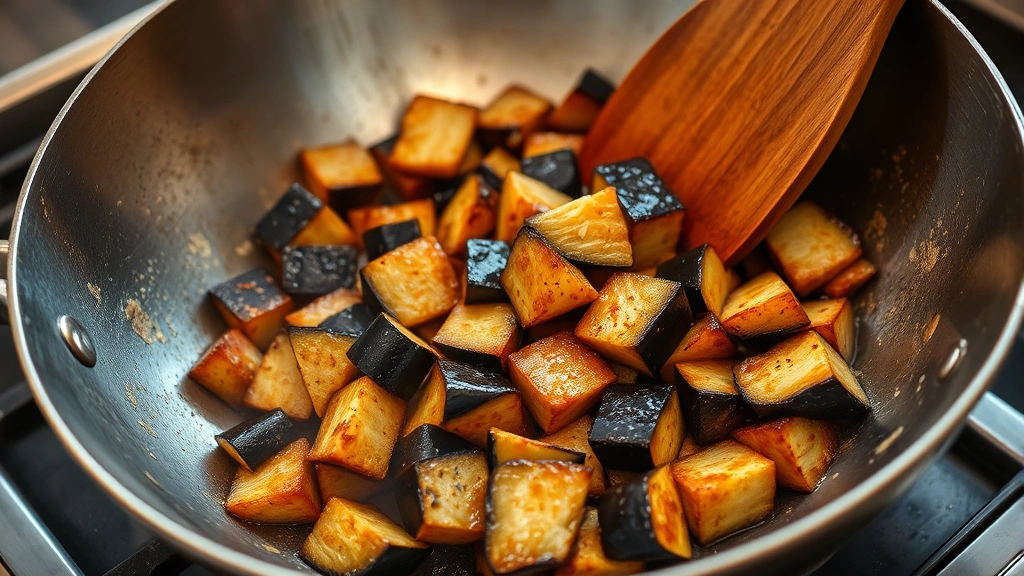
- Heat 1½ tablespoons of vegetable oil in a large wok or skillet over medium-high heat. Once the oil is shimmering (about 1-2 minutes), add half of the dried eggplant and spread it in a single layer.
- Let the eggplant cook undisturbed for 2-3 minutes until the bottom pieces begin to caramelize and turn golden brown. This is where the flavor comes from, so resist the urge to stir too early.
- Stir the eggplant and continue cooking for another 2-3 minutes until the pieces are tender and mostly caramelized on multiple sides. Transfer to a clean plate.
- Add the remaining 1½ tablespoons of oil to the same wok and repeat the process with the remaining eggplant, cooking until golden and tender, about 5-6 minutes total. Transfer to the plate with the first batch.
- Reduce heat to medium and add the minced garlic, ginger, and green onion whites to the wok. Stir constantly for about 30 seconds until fragrant – be careful not to burn the garlic.
- Add the red pepper flakes and stir for another 10 seconds until you can smell the heat.
- Pour in the reserved sauce and bring it to a gentle simmer, about 1 minute.
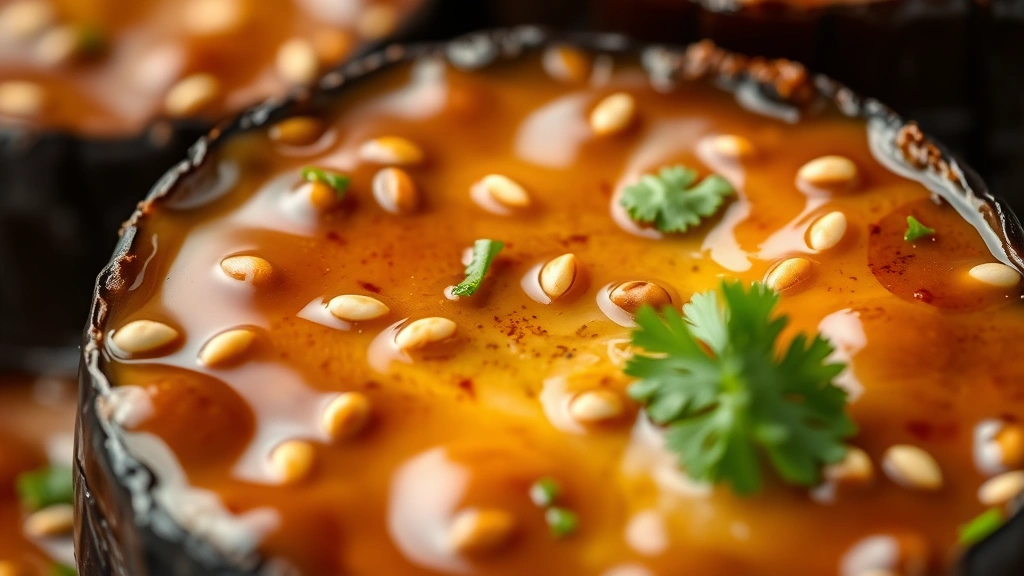
- Give your cornstarch slurry a quick stir to recombine, then pour it into the simmering sauce while stirring constantly. The sauce will thicken noticeably within 30-45 seconds.
- Return all the cooked eggplant to the wok and toss gently but thoroughly until every piece is coated with the glossy sauce. Cook for 1-2 minutes more, allowing the eggplant to heat through and absorb some of the sauce.
- Remove from heat and taste for seasoning. Add more soy sauce for saltiness, rice vinegar for tang, or honey for sweetness as needed.
- Transfer to a serving dish and garnish generously with sesame seeds, reserved green onion tops, and fresh cilantro if desired. Serve immediately over steamed rice for a complete meal, or serve as a stunning side dish.
Pro Tips
- **Asian Eggplant vs. Globe Eggplant**: Asian eggplants are longer, thinner, and have thinner skin than the large purple globe eggplants typically found in American supermarkets. They’re milder, less bitter, and have a creamier texture when cooked. If you can only find globe eggplant, cut it into slightly smaller pieces and increase the cooking time by 1-2 minutes per batch. The dish will still be delicious.
- **The Salting Step is Non-Negotiable**: I cannot stress this enough. Salting the eggplant and letting it sit draws out excess water that would otherwise make your finished dish soggy and watery. The eggplant will absorb less oil too, making the dish lighter and more flavorful. Always rinse and dry thoroughly after salting.
- **Pan Heat is Everything**: A properly heated pan is what creates those gorgeous caramelized edges. If your pan isn’t hot enough, the eggplant will steam rather than sear, and you’ll end up with a completely different (less delicious) texture. The oil should shimmer and move easily across the pan before you add the eggplant.
- **Don’t Overcrowd the Pan**: This might mean working in batches, but it’s worth it. Overcrowding drops the temperature and causes steaming. Each piece should have contact with the hot pan surface.
- **Make It Protein-Packed**: Add 8 ounces of crumbled tofu at the same time you add the garlic and ginger, or use 6 ounces of ground pork cooked separately and added at the end. Shrimp works beautifully too – add it when you return the eggplant to the wok and cook for 2-3 minutes until pink.
- **Adjust the Heat Level**: This recipe is mildly spicy from the red pepper flakes. For less heat, reduce to ⅛ teaspoon or omit entirely. For more heat, increase to ½ teaspoon or add sliced fresh Thai chilies alongside the garlic and ginger.
- **The Cornstarch Slurry**: This thickens the sauce so it clings beautifully to the eggplant. If you prefer a thinner, more saucy consistency, reduce the cornstarch to ½ teaspoon. If you like it thicker, increase to 1½ teaspoons.
- **Sauce Customization**: Love hoisin? Add 1 tablespoon alongside the soy sauce. Prefer more umami depth? Add 1 teaspoon of fish sauce. Want more sweetness? Increase honey to 1½ tablespoons or add 1 tablespoon of oyster sauce.
- **Make-Ahead and Storage**: You can prep all your ingredients up to 4 hours ahead – just keep the eggplant in a sealed container in the refrigerator. The finished dish keeps beautifully for 3-4 days in an airtight container and reheats wonderfully. Reheat gently in a wok or skillet over medium heat, adding a splash of water if needed.
- **Rice Pairing**: Serve over jasmine rice, brown rice, or even cauliflower rice for a lighter option. The starchy rice helps balance the savory sauce beautifully.
- **Leftovers Are Gold**: This is one of those dishes that tastes even better the next day as flavors meld. Pack it for lunch over rice or serve it at room temperature as part of a composed plate.
- **Vegetable Additions**: Feel free to add other quick-cooking vegetables. Bell peppers, snap peas, water chestnuts, or mushrooms all work beautifully – add them in the last minute of cooking so they stay crisp-tender.