
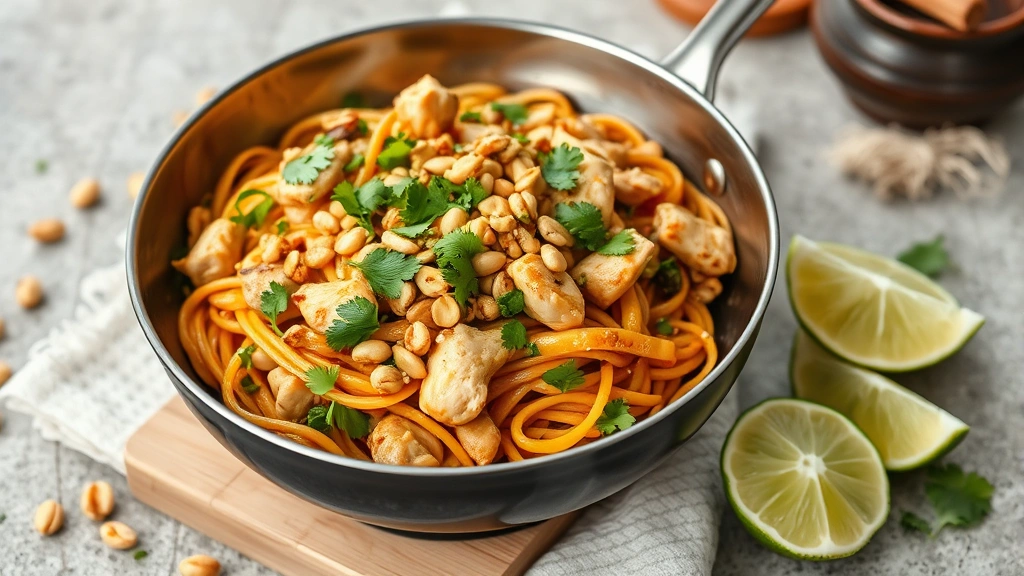
There’s nothing quite like the vibrant, complex flavors of authentic pad thai, and the wonderful news is that you can create this beloved Thai classic right in your own kitchen in just minutes! This quick and tasty chicken pad thai recipe brings together tender chicken, chewy rice noodles, and a perfectly balanced sauce that hits all those essential flavor notes: sweet, salty, sour, and spicy.
What makes this version so special is that it doesn’t require a trip to a specialty Asian market or hours of preparation. Using readily available ingredients and simple techniques, you’ll have restaurant-quality pad thai on your dinner table faster than you can say “takeout.” The key to success lies in having all your ingredients prepped and ready before you start cooking—a technique the professionals call mise en place—because once the wok hits the heat, everything comes together in mere minutes.
Pad thai is traditionally made with tamarind paste, which gives it that signature tangy flavor, but this recipe offers flexibility for home cooks. Whether you stick with traditional tamarind or opt for a lime and fish sauce combination, you’ll achieve that delicious balance that makes pad thai so craveable. The beauty of this dish is in its versatility; you can easily swap the chicken for shrimp, tofu, or beef, and adjust the heat level to suit your family’s preferences.
If you’re looking for other quick weeknight dinners with similar flavors and techniques, you might enjoy our Best Healthy Vegetable Stir Fry or our Easy Daikon Radish Stir Fry, both of which use similar quick-cooking methods and flavor profiles.
The combination of flavors in pad thai comes from a beautiful interplay of ingredients. The lime juice provides brightness and acidity, the fish sauce contributes umami depth, brown sugar adds sweetness, and fresh chilies bring the heat. When you toss in the chicken, which has been cooked until golden and tender, along with the noodles and vegetables, everything melds together into something truly magical. This is comfort food at its finest, and it’s one of those dishes that tastes even better when you’ve made it yourself.
One of the things I love most about making pad thai at home is the opportunity to customize it exactly to your liking. Prefer more vegetables? Add them. Like it spicier? Increase the chili. Want to load it with extra protein? Double the chicken or add some shrimp. This recipe serves as your foundation, and from there, you can make it entirely your own. The cooking method remains the same: high heat, quick movements, and constant attention to ensure everything cooks evenly and develops those beautiful caramelized edges.
For additional inspiration on quick Asian-inspired dinners, check out Serious Eats, which has extensive resources on authentic pad thai techniques, or explore Bon Appétit for creative variations on this classic dish. You’ll also find that many of the stir-fry techniques used in this recipe—like quick-cooking proteins—apply across many different cuisines and cooking styles.
Making pad thai is also a wonderful opportunity to teach yourself about the fundamentals of wok cooking and Asian cuisine. The high heat, the quick movements, and the emphasis on having everything prepped beforehand are all hallmarks of professional Asian cooking. Once you master this technique with pad thai, you’ll find it applies to countless other dishes, from lo mein to fried rice to simple stir-fries.
This recipe is perfect for busy weeknights when you want something delicious but don’t have hours to spend in the kitchen. It’s also great for meal prep if you cook the chicken and prepare your ingredients ahead of time; then on busy evenings, you can have dinner ready in under 15 minutes. Serve it straight from the wok while everything is still hot and the noodles have that perfect slight chew to them.
Whether you’re a pad thai novice or you’ve enjoyed it countless times at your favorite Thai restaurant, this homemade version will surprise you with how simple and satisfying it can be. The combination of textures—chewy noodles, tender chicken, crisp vegetables, and crunchy peanuts—along with those complex, balanced flavors makes this a dish that you’ll find yourself craving again and again. So grab your wok, round up your ingredients, and prepare to discover why pad thai has become such a beloved dish around the world.
Ingredients
- 8 oz rice noodles (about 1/4 inch wide)
- 1 lb boneless, skinless chicken breast, thinly sliced
- 3 tablespoons tamarind paste (or 2 tablespoons lime juice plus 1 tablespoon fish sauce)
- 3 tablespoons fish sauce
- 2 tablespoons brown sugar
- 2 tablespoons vegetable oil, divided
- 3 cloves garlic, minced
- 2 cups broccoli florets
- 1 red bell pepper, thinly sliced
- 3 green onions, cut into 2-inch pieces
- 1/2 cup roasted peanuts, roughly chopped
- 2 limes, cut into wedges
- 1-2 red chilies, thinly sliced (optional, for heat)
- 2 eggs
- 1 cup bean sprouts
- Salt and pepper to taste
- Fresh cilantro for garnish (optional)
Instructions
- Soak the rice noodles in room temperature water for 30-40 minutes until they are pliable but still firm. Drain well and set aside.
- In a small bowl, whisk together the tamarind paste (or lime juice and fish sauce combination), fish sauce, and brown sugar until the sugar dissolves. Taste and adjust seasoning as needed; set aside.
- Season the sliced chicken breast with salt and pepper. Heat 1 tablespoon of oil in a large wok or skillet over medium-high heat.
- Add the chicken to the hot wok and cook, stirring frequently, for 5-7 minutes until the chicken is golden brown and cooked through. Remove the chicken to a plate and set aside.
- Add the remaining tablespoon of oil to the wok. Once hot, add the minced garlic and cook for about 30 seconds until fragrant, stirring constantly to prevent burning.
- Add the broccoli florets and red bell pepper slices to the wok. Stir-fry for 3-4 minutes, tossing frequently, until the vegetables are tender-crisp but still maintain their color and slight firmness.
- Push the vegetables to the side of the wok and crack the two eggs into the empty space. Scramble the eggs lightly with a spatula, breaking them into small pieces as they cook, which takes about 1 minute.
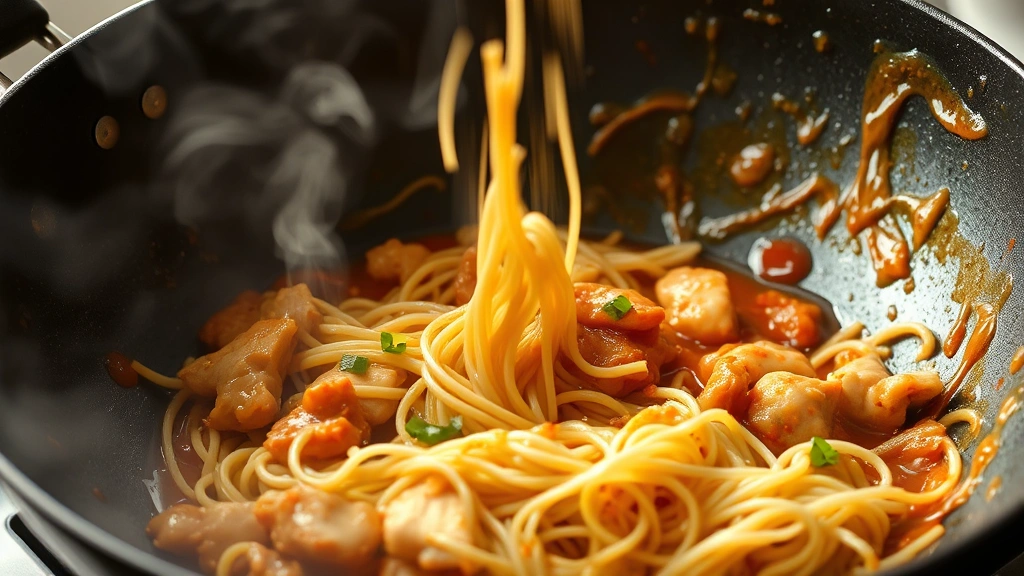
- Add the drained rice noodles to the wok along with the cooked chicken and the prepared sauce. Toss everything together vigorously for 2-3 minutes, ensuring the noodles are well coated with the sauce and everything is heated through.
- Add the green onions and bean sprouts to the wok, tossing gently for about 1 minute until just combined and warmed through.
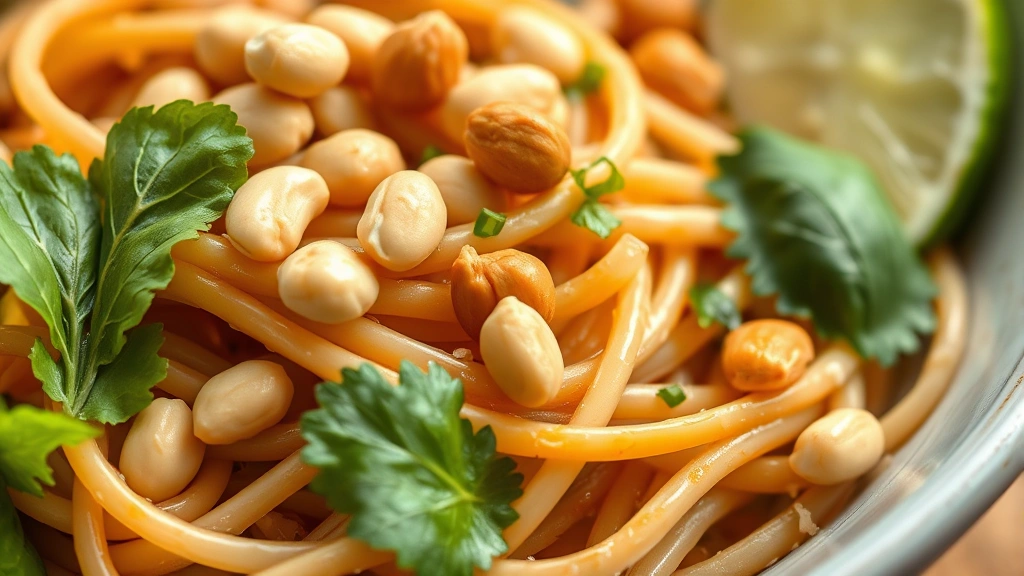
- Transfer the pad thai to serving plates or bowls. Top each portion generously with the chopped roasted peanuts and sliced red chilies if desired.
- Serve immediately with lime wedges on the side, allowing each person to squeeze fresh lime juice over their portion to taste. Garnish with fresh cilantro if desired.
- Enjoy your homemade pad thai while it’s hot, and savor the perfect balance of sweet, salty, sour, and spicy flavors!
Pro Tips
- Noodle preparation is crucial: soak them in room temperature water rather than hot water to prevent them from becoming mushy. They should be soft enough to eat but still have a slight firmness before adding to the wok.
- Mise en place (having all ingredients prepped and ready before cooking) is essential for pad thai. Because the cooking process is so quick, you won’t have time to chop vegetables or measure sauce while the wok is hot.
- If you cannot find tamarind paste, you can substitute with lime juice and fish sauce, though the flavor will be slightly different. Some cooks also use a combination of lime juice and a small amount of ketchup for a more Westernized version.
- The heat level can be completely customized. If you prefer mild pad thai, omit the chilies entirely. For extra heat, add more sliced chilies or a pinch of cayenne pepper to the sauce.
- This recipe is easily adaptable to different proteins. Substitute the chicken with shrimp (cook for just 2-3 minutes), firm tofu cubes, or beef sirloin. You can also make a vegetarian version by omitting the fish sauce or substituting it with soy sauce and doubling the lime juice.
- Fresh ingredients make a significant difference in the final flavor. Use fresh lime juice rather than bottled, fresh garlic rather than jarred, and fresh green onions and cilantro if possible.
- The eggs in pad thai serve as both protein and binder, helping to coat the noodles. If you prefer not to include eggs, simply skip that step and add an extra egg’s worth of protein in another form.
- Leftover pad thai can be stored in an airtight container in the refrigerator for up to 3 days. Reheat gently in a wok or skillet over medium heat, adding a splash of water if the noodles seem dry.
- For a creamier version, some people like to add a splash of coconut milk to their sauce, which adds richness and complexity.
- Rice noodles can vary in width; this recipe works best with noodles that are about 1/4 inch wide, similar to fettuccine noodles.
- Don’t overcrowd your wok during cooking. If you’re doubling the recipe, cook in batches to ensure proper browning and flavor development.